On the Second Amendment
“A well regulated Militia, being necessary to the security of a free State, the right of the people to keep and bear Arms, shall not be infringed.” - The Second Amendment to the US Constitution
Where I stand
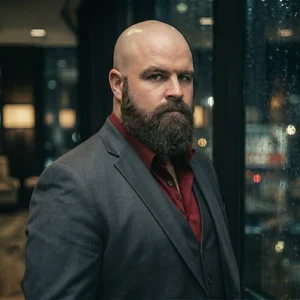
I own firearms and support the Second Amendment right to keep and bear arms. I hold a Colorado Concealed Carry Permit. I believe in the Founding Fathers’ purpose of defending liberty with firearms when tyranny raises its head.
That’s not to say we don’t have a firearm problem in the US. Mass shootings and gun violence rear their heads daily. The solution to the firearm problem in this coutry comes down to holding owners responsible.
Better background checks with a database that includes both criminal and psych flags
Hold firearm owners accountable when they fail to use, carry, or store their firearms safely
Charge firearm owners when their guns are used in crimes because they failed to store them safely, i.e. a child finds a gun in the nightstand and shoots up the school
Remove firearms from owners who fail to operate their firearms safely and harm someone with a negligent discharge
Stop making laws limiting specific firearms just because they are scary; that fixes the wrong problem
Historical Context
On December 15, 1791, the Founding Fathers ratified the Bill of Rights, including the second amendment. Since that time it has been one of the most controversial constitutional amendments.
A well-regulated militia…
At the time the US had no standing army, preferring to rely on citizen militias to protect our young nation. Ordinary citizens had to be ready at any time to stand in defense of the country. In making this point the framers wrote the first clause of the amendment. A clause that since has created much debate as future legal scholars debated whether they meant that the miliia or the arms should be well-regulated. Based on the laws made by the same group, I put forth they meant that both should be well-regulated.
There were targeted restrictions on who could own firearms. Those labeled dangerous through criminal behaviour, limits on “dangerous and unusual weapons” such as cannons and blunderbusses, and the storage of large quantities of gunpowder were put in place. There were also racial prohibitions, restricting the possession of firearms for black people.
That said, the overall consensus at the time was stated clearly in the Pennsylvania Constitution of 1776, “no freemen shall ever be debarred the use of arms.”
…being necessary to the security of a free state…
As mentioned, the US had no standing army at the time and that was for good reason. The Founding Fathers had just broken free from the oppression of the British. They were distrustful of having a standing military, preferring instead a militia made up of regular citizens to protect the fledgling democracy from invaders and from a tyranical government should the goverment ever be corrupted. This was made clear in the Federalist Papers and other writings of the Founding Fathers.
…the right of the people to keep and bear arms shall not be infringed.
This is where the debates start. What is infringement? Absolutists would say the constitution guarantees the right to own and carry any weapon. Some say the “well-regulated” clause implies that the government can limit what arms can be legally owned and carried or who can carry them.
Even the SCOTUS over the years has had different interpretations.
In Presser v. Illinois, 1886, the SCOTUS upheld a state law prohibiting private militias and held that the Second Amendment restricts only federal action, not the states.
In United States v. Miller, 1939, SCOTUS upheld a federal ban on sawed off shotguns under the National Firearms Act of 1934, ruling that the Second Amendment protects only weapons “in common use” for lawful purposes such as militia service.
In District of Columbia v. Heller, 2008, SCOTUS made a marked switch from a collective right interpretation to an individual right, recognizing an individual’s right to possess a firearm for self‑defense within the home, separate from militia service and rendering the D.C. handgun ban unconstitutional.
McDonald v. Chicago, 2010, applied the Heller individual‑right holding to the states via the Fourteenth Amendment’s Due Process Clause. State and local gun bans are subject to the same scrutiny.
New York State Rifle and Pistol Association v. Bruen, 2022, declared that modern gun regulations must be consistent with the Nation’s historical tradition of firearm regulation and struck down New York’s “proper cause” requirement for concealed‑carry permits. This cemented the court’s history and traditon test as applied in Heller and McDonald.
Today
There is no consensus on the Second Amendment in the US. There will always be absolutists who would be fine carrying a rocket propelled grenade launcher into Arby’s. There will also be those who’d prefer we melted down all of the guns. Then there is reality. There are more firearms in the US than there are people. It is unrealistic to believe that disarmament is possible, even if there was the legal will to do so. This also applies to “assault rifles” such as the AR-15 and AK-47. When the Assault Weapons Ban expired that cat jumped out of the bag and it won’t be going back.
That doesn’t mean we can only send “thoughts and prayers” every time a mass shooting happens. We can limit access to firearms with better background checks that include psych flags. We can remove firearms from those who operate and store them improperly. We can hold owners responsible for how they are used. We can start fixing the real problems with firearms, the people pulling the triggers.