
Women are right to choose the bear
Content Warning: Discussion of rape and sexual violence
NOTE: I realize this isn’t my normal campaign fare, but this topic is vital and I would be remiss if I didn’t use my political platform to call attention to it.
The “Man vs. Bear” meme isn’t a hypothetical thought experiment or a social media trend—it is a chillingly logical risk assessment. When women say they would rather face a wild animal than a man in the woods, they aren’t being hyperbolic; they are reacting to a reality that the data, and our own leaders, continue to validate.
The Reality of the “Online Rape Academy”
In February 2026 alone, a single website—rightfully dubbed an “online rape academy”—logged 62 million individual visits. This isn’t just a dark corner of the internet; it is a massive, thriving subculture where men share footage of assaults, exchange tactical tips, and coordinate plans for violence. This platform has existed for years, operating in the shadows while millions of men participated in the normalization of sexual terror. It took a CNN exposé to bring it to light, despite logging such high traffic.
A Bipartisan Culture of Silence
The rot isn’t confined to the digital underground; it is entrenched in the highest seats of power. This issue crosses party lines, revealing a systemic refusal to hold powerful men accountable:
The Executive Branch: We are led by a president who is an adjudicated rapist and who openly bragged about sexual assault as a perk of fame during his first campaign.
The Democratic Establishment: We have known Bill Clinton was a predator since the 1990s, yet he remains a celebrated fixture at party events, treated as an elder statesman rather than a cautionary tale.
Congressional Complicity: Recent revelations regarding Eric Swalwell’s behavior were met with admissions from colleagues that his conduct was “well-known.” Yet, not one congressman had the courage to step up and report it.
Global Regression: For the first time in 70 years, the U.S. refused to endorse the statement of the UN Commission on the Status of Women, dismissing a global effort to end discrimination and achieve gender equality as “woke DEI.”
Why Men Must Police Their Own
This is where the responsibility shifts. It is not the job of women to fix a culture they didn’t create, nor is it their job to not be afraid. It is our responsibility as men to police our own.
True allyship isn’t just about personal good behavior; it’s about active intervention. When we sit in locker rooms, group chats, or congressional offices and hear locker room talk, see the tips, or witness the predatory behavior—and we stay silent—we are providing the cover that allows these statistics to grow.
We cannot claim to be one of the good ones while we allow the bad ones to operate with impunity in our presence. Until men start holding other men accountable—socially, professionally, and legally—the bear will always be the safer choice. We have to stop being the audience for this behavior and start being the barrier against it.
The safety of women is not a “women’s issue.” It is a test of our collective character.
The Cost Of War
In which we discuss the real cost of war.
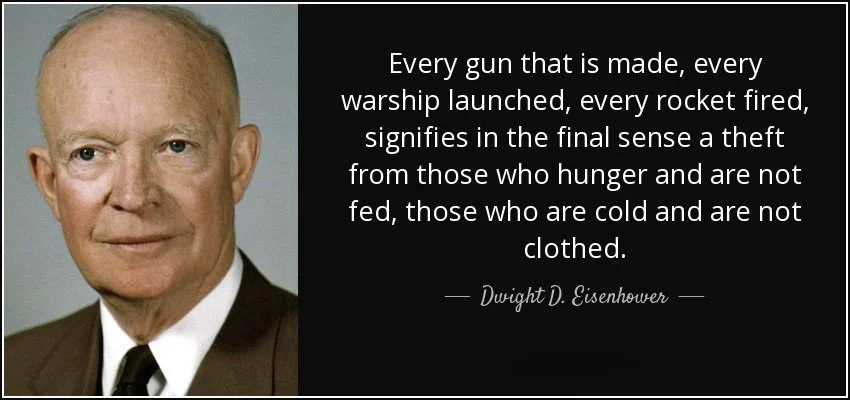
War isn't just a tragedy; it is a theft. To date, the conflict in Iran has drained $17 billion from U.S. taxpayers, with a staggering $200 billion more on the horizon. This isn't just a line item—it’s a moral deficit.
The Human Toll
The cost of this conflict is written in blood, suffering, and destruction:
4,500+ lives lost, including at least 14 U.S. service members
Those service members who make it back are forever scarred, often invisibly
Hundreds of thousands of civilians driven from their homes
An untold number of families shattered in ways we can't quantify
The Opportunity Cost
For the price of this war, we could fundamentally rewrite the American story. We aren't just choosing war; we are choosing not to:
End hunger
House every homeless veteran
Fund the VA at 100% for every veteran, for the rest of their lives
Pay those who teach our children a living wage
Rebuild our failing infrastructure
We are sacrificing our heroes and our treasure to fund suffering and destruction. It is time to stop paying for a crime and start investing in our people.
Putting the choice in pro-choice
In which we discuss giving expectant mothers a real choice.
I am 100% pro-choice. I believe that bodily autonomy is a fundamental human right—the bedrock upon which all other freedoms are built. Abortion is healthcare, and when politicians interfere with medical decisions, they are practicing medicine without a license. The decision to carry a pregnancy must remain exclusively between a patient and their physician.
However, we must ask ourselves: In today’s America, is "choice" a reality or a luxury?
The Illusion of Choice
Even in states where reproductive rights are protected, the "choice" to raise a child is often stripped away by a crushing reality. When food, housing, and healthcare costs are astronomical, the decision to start a family becomes a financial impossibility.
While right-wing extremists work to ban abortion even in cases of rape or medical necessity, they simultaneously dismantle the social safety net that makes parenting viable. With gun violence now the leading cause of death for American children and affordability a thing of the past, it is no wonder birth rates are at historic lows. Is it truly a "choice" when the alternatives are poverty, debt, or danger?
Why Access and Autonomy Matter
The data is clear: the primary reasons for elective abortions are financial instability, lack of support, or timing. Late-term abortions are almost exclusively reserved for tragic circumstances where the mother’s life is at risk or the pregnancy is no longer viable. No one reaches the third trimester and changes their mind on a whim.
We must also address the double standard of autonomy. As a cisgendered man, the law ensures I cannot be forced to donate blood, tissue, or organs to save another life—even if the procedure is risk-free. Equal protection under the law demands that having a uterus does not strip a person of that same fundamental right.
A Tale of Two Systems
Imagine a young woman who discovers an unplanned pregnancy. She is hardworking but lacks resources; her parents are aging, and her partner is equally unprepared.
In our current system: She faces a mountain of debt. Even with insurance, birth can cost $18,000, skyrocketing into the six figures if complications arise. Adoption isn't a "free" alternative when the medical costs of pregnancy alone can ruin a person financially. Also, as an adopted child myself, that system is rife with its own issues. She is trapped between the proverbial rock and a hard place.
In a just system: Imagine this same woman living in a society with a living wage, subsidized childcare, and universal healthcare. Here, she has a real choice. She can choose to be a parent because the system supports her, rather than punishing her.
The Path Forward: A Comprehensive Plan
To give every person a real choice, we must build a nation that values life both before and after birth. My plan focuses on five pillars:
Reproductive Freedom - Codify unrestricted abortion access as a National Constitutional Right.
Economic Dignity - Establish a livable federal minimum wage; full-time work must support a life of dignity.
Family Support - Implement more robust paid family leave and subsidized childcare to ensure no parent has to choose between a paycheck and their child.
Public Safety - Enact common-sense gun safety laws to ensure the United States is a safe place for children to grow up.
Healthcare Reform - Move toward a system of universal healthcare where medical debt never dictates a family’s future.
We must strive for a world where people are free to speak, love, and live as they choose—a world where the government supports its people and the future looks bright. To get there we need only move forward, together.
What the Flock?
In which we discuss the surveillance state and Flock in particular.
Flock Safety is a tech company that uses a combination of Automated License-Plate Readers (ALPR), hi-resolution video surveillance, audio detection including a gun-fire locator, and AI to analyze it all on a cloud-based platform. The sales pitch they offer cities and homeowners’ associations is compelling. They claim to be able to help solve crimes from porch pirates to kidnapping. They can track anyone. The use cases they present are compelling. I honestly can see why so many communities have signed up.
“To solve and eliminate crime – you need evidence.” - Flock Safety motto
The case looks clear cut. No more porch pirates getting away with your packages. Kidnappers tracked and apprehended before they can harm the children. What could go wrong?
What went wrong
Flock systems watch every move in the communities they surveil. But who is watching Flock Safety? Turns out, just about anyone can. Right here in Douglas County, CO, researchers discovered a number of Flock cameras streaming live on the public internet with no authentication. People could watch live feeds and up to 30 days of footage. Some of these cameras faced children’s play areas. They were like an all you can kidnap menu for predators who could see which kids were being watched and where camera blind spots were located.
Flock cameras have also been shown by security researchers to be vulnerable to multiple types of low-skill attack, meaning one does not require “hacker” skills to breach Flock systems. While the company claims its core systems in the cloud have never been breached, individual cameras have proven vulnerable to both misconfigurations, poor password practices, and physical access attacks.
Who watches the Watchmen?
Surveillance such as that offered by Flock triggers comparison to Orwell’s 1984 for good reason. Even if Flock stepped up to secure their products, those who are supposed to have access often abuse it.
In Sedgwick, KS, a now former police chief used Flock’s ALPR system to track his ex-girlfriend over 228 times in 4 months. A county in Washington state was subject to a phishing attack, with a person posing as law enforcement requesting the location of a particular vehicle. It was only a fast thinking supervisor who caught the irregularities in the request that protected that data. In Joplin, MO, an audit of the police department Flock usage discovered an officer using the system to track an ex, bypassing a restraining order.
In states with draconian abortion laws, officials have considered using Flock to track women suspected of trying to leave the state for abortion care.
Then there is DHS. Cities and communities who did not sign on to cooperate with DHS are having their camera and ALPR data taken without their consent. People are being tracked without their knowledge or consent. Not just immigrants. The LGBTQIA+ community, American citizens who speak languages other than English, people of color, and those who exercise their First Amendment rights to speak out against this lawless administration are being tracked.
Palantir
Teaming up with Flock Safety is Palantir, a tech company providing the data-analytics component for law enforcement agencies to quickly aggregate and search the data from Flock devices. Using AI they claim they can use predictive-policing. Any fans of science fiction dystopian futures probably just had a chill shoot up their spine. It is real, and it is here. AI pre-crime predictions.
So who is Palantir? It is the brain child of Peter Thiel, one of Donald Trump’s biggest supporters and billionaire who once said he no longer believes freedom and democracy are compatible. He argues that monopolies are better for society than competition and he believes in innovation at all costs. He believes diversity and multiculturalism are toxic to intellectual life. In other words, he’s a racist lunatic and cartoon super-villain. He’s Lex Luthor in a Klan hood.
What can we do?
I get it, this is terrifying and reads like a pitch for the prequel to Robocop. But there is hope. If you live in a city, county, or HOA that is considering Flock Safety, show up and voice your concerns. Gather your neighbors and show up to meetings. Raise your voice loud and strong. If your city or HOA has already invested in Flock, start lobbying to end the contract. Bring in lawyers if you must. If the argument for keeping Flock is crime prevention, there are plenty of companies that offer surveillance that is more secure and not being sold to a lawless administration.
I know this is scary but we can fix this. We can if we stand and move forward, together.
Together
Forward together isn’t just my campaign slogan, it is how we progress as a society.
My campaign motto, forward together, is more than just lip service. Here’s why I chose it.
Stronger Together
Human beings did not become the world’s dominant species by wandering alone. Evolution shaped us as pack animals—creatures whose survival depended on cooperation, shared vigilance, and mutual aid. Our ancestors who hunted in coordinated bands, tended each other’s wounds, and pooled knowledge about fire, shelter, and edible plants out‑competed solitary competitors. That same instinct to band together underpins everything we do today, from families gathering around a kitchen table to neighborhoods rallying after a storm.
I work in tech as a cloud solutions architect where we use Site Reliability Engineering, a methodology that emphasizes communal work to make a better, more reliable cloud infrastructure. I have seen firsthand how teamwork turns a broken system into a resilient one; the same principle guides my vision for House District 45.
Better Together
History repeatedly proves that when we unite, we lift the whole community higher.
Civil‑rights movement – Across the 1950s and ’60s, countless ordinary Americans marched, boycotted, and organized sit‑ins. By standing shoulder‑to‑shoulder, they dismantled Jim Crow laws, secured voting rights, and reshaped the nation’s moral compass. Their success was never the work of a single leader, but the collective courage of millions demanding dignity for all.
Natural‑disaster recovery – When wildfires ripped through Colorado’s Front Range in 2020, neighbors opened their homes to displaced families, volunteers cleared debris, and local businesses supplied food and water. The rapid, coordinated response saved lives and rebuilt towns faster than any top‑down plan could have imagined.
The Olympic spirit – Every four years athletes from rival nations gather in peaceful competition, showcasing that humanity can celebrate excellence while honoring shared values. The Games remind us that global progress thrives on collaboration, not conquest.
These moments echo the language of our campaign: “we’re ready to roll up our sleeves,” “people‑first solutions,” and “community‑driven change.” They illustrate that when we act as one, we create a brighter, more equitable future.
Forward Together
Looking ahead, the challenges we face—poverty, hunger, disease, and war—are too vast for any single person or party to solve alone. Yet the same collaborative spirit that powered past victories can guide our path forward, starting right here in Douglas County.
Housing affordability – By expanding low‑income housing incentives and protecting renters with a robust “Renter’s Bill of Rights,” we can keep families from being priced out of their homes, mirroring the nationwide push for economic security.
Quality education – Investing in stable K‑12 funding, smaller class sizes, and modern classroom technology equips our children to compete in a global economy, just as the post‑World‑II GI Bill lifted an entire generation.
Clean‑energy jobs – Accelerating Colorado’s Renewable Portfolio Standard to 100 % clean energy by 2035 will create green‑tech jobs right here, echoing the industrial boom that lifted communities out of hardship in the early 20th century.
Healthcare access – Expanding Medicaid and safeguarding reproductive rights ensures every resident can stay healthy, a modern parallel to the public‑health advances that eradicated polio and smallpox.
Climate resilience – By managing the Colorado River with peer‑reviewed data, protecting tribal water rights, and investing in adaptive infrastructure, we safeguard our water supply for generations—just as early settlers learned to cooperate with the land to survive.
Conclusion
If we apply the same principle that made us the planet’s dominant species—working together—we can turn these ambitions into reality. My campaign is built on that conviction: Stronger, Better, Forward—together. Join me, and let’s shape a future where every Coloradan thrives because we chose unity over division. Let’s move forward, together.
On the Second Amendment
In which we discuss the right to bear arms and the responsibilities that come with it.
“A well regulated Militia, being necessary to the security of a free State, the right of the people to keep and bear Arms, shall not be infringed.” - The Second Amendment to the US Constitution
Where I stand
I own firearms and support the Second Amendment right to keep and bear arms. I hold a Colorado Concealed Carry Permit. I believe in the Founding Fathers’ purpose of defending liberty with firearms when tyranny raises its head.
That’s not to say we don’t have a firearm problem in the US. Mass shootings and gun violence rear their heads daily. The solution to the firearm problem in this coutry comes down to holding owners responsible.
Better background checks with a database that includes both criminal and psych flags
Hold firearm owners accountable when they fail to use, carry, or store their firearms safely
Charge firearm owners when their guns are used in crimes because they failed to store them safely, i.e. a child finds a gun in the nightstand and shoots up the school
Remove firearms from owners who fail to operate their firearms safely and harm someone with a negligent discharge
Stop making laws limiting specific firearms just because they are scary; that fixes the wrong problem
Historical Context
On December 15, 1791, the Founding Fathers ratified the Bill of Rights, including the second amendment. Since that time it has been one of the most controversial constitutional amendments.
A well-regulated militia…
At the time the US had no standing army, preferring to rely on citizen militias to protect our young nation. Ordinary citizens had to be ready at any time to stand in defense of the country. In making this point the framers wrote the first clause of the amendment. A clause that since has created much debate as future legal scholars debated whether they meant that the miliia or the arms should be well-regulated. Based on the laws made by the same group, I put forth they meant that both should be well-regulated.
There were targeted restrictions on who could own firearms. Those labeled dangerous through criminal behaviour, limits on “dangerous and unusual weapons” such as cannons and blunderbusses, and the storage of large quantities of gunpowder were put in place. There were also racial prohibitions, restricting the possession of firearms for black people.
That said, the overall consensus at the time was stated clearly in the Pennsylvania Constitution of 1776, “no freemen shall ever be debarred the use of arms.”
…being necessary to the security of a free state…
As mentioned, the US had no standing army at the time and that was for good reason. The Founding Fathers had just broken free from the oppression of the British. They were distrustful of having a standing military, preferring instead a militia made up of regular citizens to protect the fledgling democracy from invaders and from a tyranical government should the goverment ever be corrupted. This was made clear in the Federalist Papers and other writings of the Founding Fathers.
…the right of the people to keep and bear arms shall not be infringed.
This is where the debates start. What is infringement? Absolutists would say the constitution guarantees the right to own and carry any weapon. Some say the “well-regulated” clause implies that the government can limit what arms can be legally owned and carried or who can carry them.
Even the SCOTUS over the years has had different interpretations.
In Presser v. Illinois, 1886, the SCOTUS upheld a state law prohibiting private militias and held that the Second Amendment restricts only federal action, not the states.
In United States v. Miller, 1939, SCOTUS upheld a federal ban on sawed off shotguns under the National Firearms Act of 1934, ruling that the Second Amendment protects only weapons “in common use” for lawful purposes such as militia service.
In District of Columbia v. Heller, 2008, SCOTUS made a marked switch from a collective right interpretation to an individual right, recognizing an individual’s right to possess a firearm for self‑defense within the home, separate from militia service and rendering the D.C. handgun ban unconstitutional.
McDonald v. Chicago, 2010, applied the Heller individual‑right holding to the states via the Fourteenth Amendment’s Due Process Clause. State and local gun bans are subject to the same scrutiny.
New York State Rifle and Pistol Association v. Bruen, 2022, declared that modern gun regulations must be consistent with the Nation’s historical tradition of firearm regulation and struck down New York’s “proper cause” requirement for concealed‑carry permits. This cemented the court’s history and traditon test as applied in Heller and McDonald.
Today
There is no consensus on the Second Amendment in the US. There will always be absolutists who would be fine carrying a rocket propelled grenade launcher into Arby’s. There will also be those who’d prefer we melted down all of the guns. Then there is reality. There are more firearms in the US than there are people. It is unrealistic to believe that disarmament is possible, even if there was the legal will to do so. This also applies to “assault rifles” such as the AR-15 and AK-47. When the Assault Weapons Ban expired that cat jumped out of the bag and it won’t be going back.
That doesn’t mean we can only send “thoughts and prayers” every time a mass shooting happens. We can limit access to firearms with better background checks that include psych flags. We can remove firearms from those who operate and store them improperly. We can hold owners responsible for how they are used. We can start fixing the real problems with firearms, the people pulling the triggers.
With liberty and justice for all
In which we discuss what liberty really means.
The promise of “liberty and justice for all” is a constitutional commitment that demands concrete social structures. The freedoms that underpin democracy cannot be realized when we lose sight of this fact. The pillars of liberty must be shored up if we are ever to attain the vison which our nation was founded. I know this topic will anger some, but I ask you to remember, rights aren’t a limited thing. Others gaining rights doesn’t take away your rights. Rights aren’t pie. Everyone can have them without you giving up any.
1. Bodily Autonomy: The Bedrock of All Rights
Bodily autonomy means that each person has the exclusive right to control what happens to their own body. It is the foundation upon which other liberties rest. If you cannot control your own body, no other right matters.
Reproductive Rights
The right to choose whether to continue a pregnancy is a quintessential exercise of bodily autonomy. When a person’s ability to decide about their reproductive health is stripped away, women die. The fundamental core of this right isn’t the argument so often presented about when life begins. Instead it lies in equal protection under law. No man can be made to risk their own life to keep another person alive. This renders the fetus/baby argument moot. If I as a man cannot be made to use my body to keep someone alive, equal protection under law requires that anyone with a uterus recieves that same right.
If that argument isn’t enough for you, there’s another vital point. Access to abortion saves lives. Pregnancy in the best of times is risky. Access to abortion is often the only way to protect a mother’s health. When safe, legal abortions aren’t available, desperite people will turn to unsafe back-alley abortion. Before Roe v. Wade between 5,000 and 10,000 women died every year in back-alley abortions. Hundreds more died due to pregnancy related complications. Access to abortion saves lives.
If you don’t like abortion, don’t get one.
Gender‑Affirming Care
For transgender, non‑binary, and gender‑diverse people, access to gender‑affirming medical care (hormones, surgeries, counseling) saves lives. Denying that care forces individuals to live in bodies that do not reflect their identities, leading to severe mental‑health consequences and marginalization. Recognizing gender‑affirming care as a protected right affirms the principle that no one may be compelled to surrender control over their own body.
Gender-affirming care isn’t just for trans people. Hair transplants, breast implants, hormone replacement, etc are all gender affirming. Men who develop breast tissue, gynecomastia, need the same surgery trans men get to remove the unwanted tissue.
If you don’t like gender-affirming care, don’t get it. Others getting it doesn’t harm you in any way.
Why Autonomy Is Fundamental
If the state can dictate what we do with our bodies, it gains a foothold to regulate speech, belief, and association. Protecting bodily autonomy therefore protects the entire architecture of liberty, ensuring that the government cannot arbitrarily intervene in the most private aspects of our lives.
2. Freedom of Religion—and Freedom From Religion
The religion clauses of the First Amendment guarantees two intertwined freedoms:
Free Exercise: Individuals may practice any religion—or none at all—without governmental interference.
Establishment Clause: The government may not favor, endorse, or establish any religion.
The Founding Fathers were students of history. They understood the conflicts that arose from state-sponsored religion. Eurpoean history showed them the folly of mixing government and religion.
Equality Across Faiths
A truly inclusive society treats every faith tradition with equal respect. Whether someone follows Christianity, Islam, Judaism, Buddhism, Indigenous spiritualities, or identifies as atheist, the state must remain neutral. This neutrality protects minority religions from majoritarian oppression and safeguards secular citizens who choose not to worship.
For those who want their religion to take legal precedence, think about it this way. How would you feel if the chosen state religion wasn’t the one you believe in. Even among Christian sects, there is sufficient difference that choosing one would alienate many others. By keeping separation, it grants room for all to worship as they wish.
History shows that when governments align with a particular faith, dissenting voices—whether religious or secular—are silenced, and civil liberties erode. Maintaining a clear wall between church and state preserves the pluralistic fabric essential to liberty and justice.
3. Freedom of the Press: A Bulwark Against Tyranny
A free, independent press serves is core to a functioning democracy. Jouranlists investigate and expose abuses of power, keeping officials accountable. This information provides citizens with the facts needed to make informed choices in a democracy. An informed populace is central to the preservation of a free state.
When the press is constrained—through censorship, intimidation, or corporate monopolies—the public loses its primary mechanism for checking governmental overreach. An empowered press is therefore a cornerstone of liberty, ensuring that tyranny cannot flourish unnoticed.
4. Freedom of Speech: Guarding the Marketplace of Ideas
Freedom of speech protects the right to express opinions, even unpopular or dissenting ones, without fear of government retaliation. Its importance lies in several key ways:
Prevents Government Censorship: By limiting the state’s ability to silence criticism, speech freedom keeps elected officials honest.
Encourages Democratic Participation: Citizens can advocate for change, organize movements, and challenge policies openly.
Fosters Social Progress: Historically, marginalized groups have relied on free speech to demand civil rights, gender equality, and LGBTQ+ protections.
Without robust speech protections, the other rights discussed—bodily autonomy, religious liberty, press freedom—could be easily curtailed. Free expression is the thread that weaves together the tapestry of liberty.
5. How DEI Makes These Freedoms Work in Practice
Diversity, equity, and inclusion are not abstract buzzwords; they are practical mechanisms that ensure the constitutional guarantees reach every person.
Diversity brings a multiplicity of perspectives into policymaking, media, and workplaces, preventing homogenous thinking that can blind societies to systemic injustices.
Equity addresses historic and structural disadvantages, ensuring that marginalized groups receive the resources they need to enjoy the same freedoms as others.
Inclusion creates environments where all voices are heard, respected, and valued—essential for a vibrant public discourse.
When DEI is embedded in institutions—from schools to courts to corporations—it reinforces the very rights that protect liberty. For example, inclusive curricula that teach about gender identity and religious pluralism normalize bodily autonomy and religious freedom, making them less likely to be politicized or restricted.
Conclusion
Liberty and justice for all cannot exist in a vacuum. They require a societal framework that celebrates diversity, guarantees equitable treatment, and actively includes every individual. Bodily autonomy safeguards the personal sphere; religious freedom and the separation of church and state protect belief; a free press shines light on abuse; and free speech ensures that ideas can circulate without fear.
Together, these principles form an interdependent ecosystem. Undermining any one element weakens the whole, jeopardizing the promise that every person—regardless of gender, faith, race, or background—can truly enjoy liberty and justice. Building and defending DEI is therefore not merely a moral choice; it is a constitutional imperative for preserving the freedoms that define a democratic society.